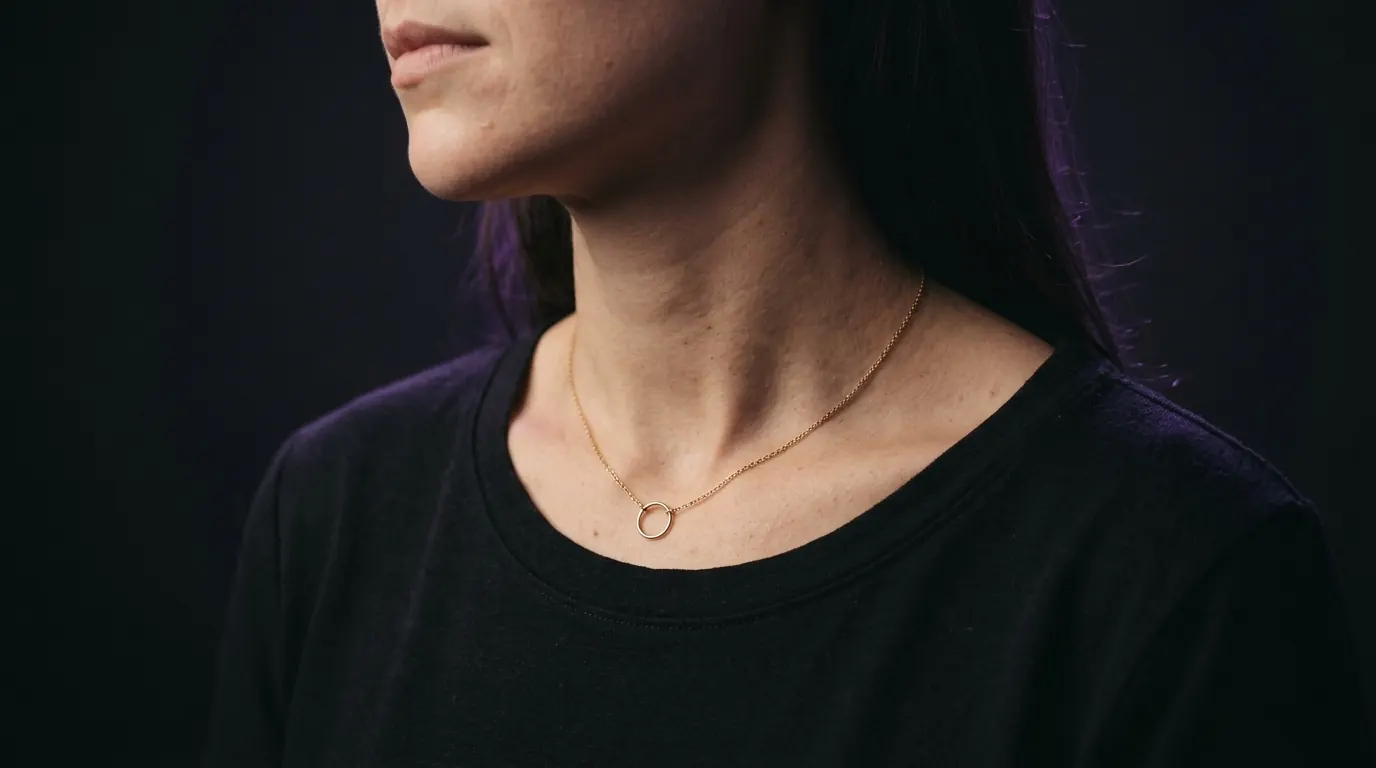
Why jewellery and fashion brands are switching
Per image, a jewellery shoot is one of the most expensive shoots there is. Every piece photographs differently. A ring needs a hand model, a stylist, lighting that makes metal look like metal, and a retoucher to clean up every reflection. Do that for a 300-piece catalogue plus new arrivals every month, and photography becomes the limit on how fast you can list products and run ads.
Fashion has the same problem in a different shape. A kurta or a co-ord set needs a model, a location and a stylist, multiplied by every colourway.
AI product photography removes the shoot. It doesn't remove the need to get the product exactly right, and that's where most attempts fall over.
The rule that matters: never generate the product from text
Type "gold ring with a small diamond" into an image model and you'll get a beautiful ring. It won't be your ring. The band will be the wrong width, the setting will be invented, and the customer who orders it will open a box that doesn't match the ad.
So the real product always goes in as a reference image. The model's job is to place that exact piece into a new scene, not to imagine one. Everything in our pipeline is built around that.
How the Vision 360 image agent works
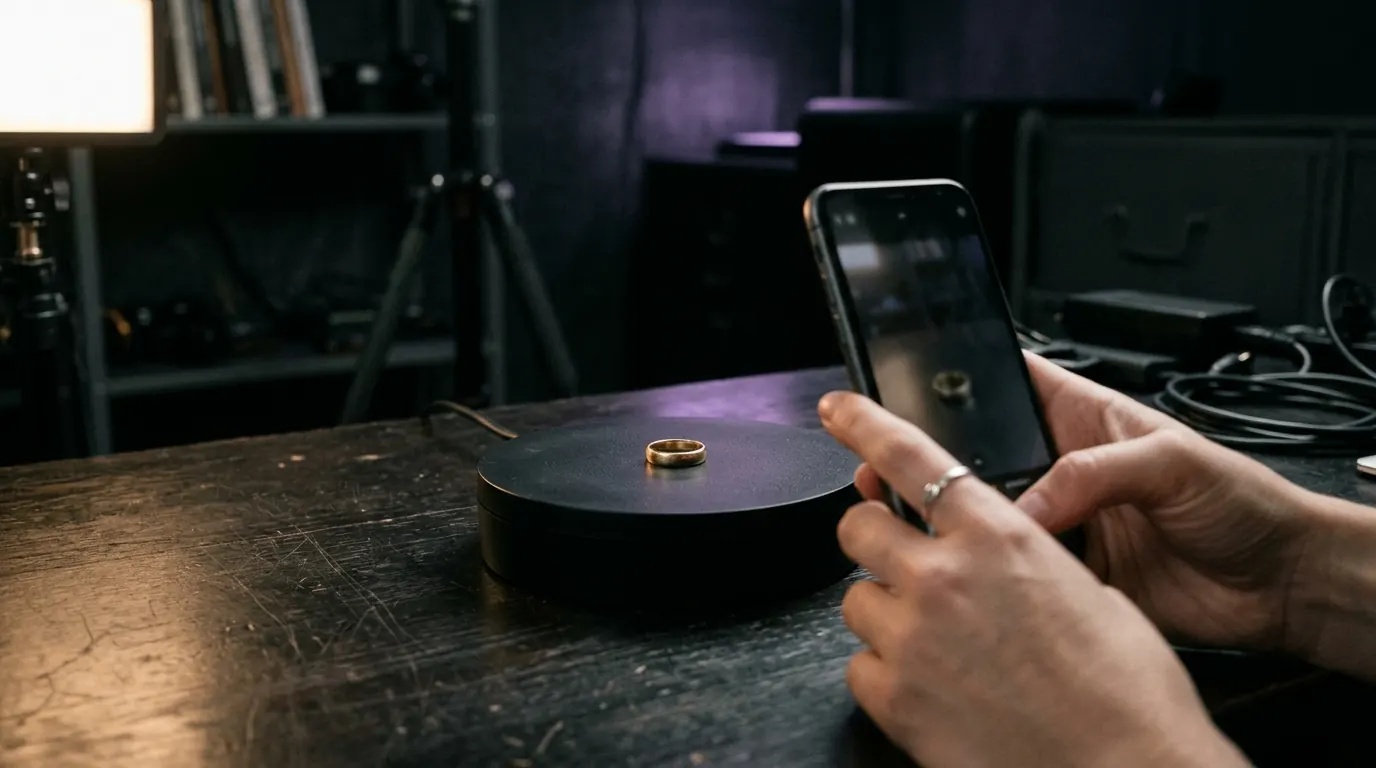
Vision 360 is a jewellery brand we built a custom image agent for. It runs in five steps.
1. Scan. A machine scans each physical piece to capture its exact detail: the shape, the stones, the metal and the finish.
2. Detect the shape. The agent works out what it's looking at: ring, pendant, stud, bangle or chain. Each type has its own rules for how it sits on a body.
3. Pick the best angle. A solitaire sells from a three-quarter view that shows the stone. A bangle sells from the side. The agent picks the angle that shows each piece at its best.
4. Render with high attribution. The generation is anchored hard to the reference, so shape, proportions and detail stay true to the real piece.
5. Put it on a model. The final image places the piece on a hand, neck or ear at the right scale, ready for the product page and for ads.
Vision 360 also runs a lead automation that captures every Meta ad enquiry, so the images that bring people in are connected to a follow-up that doesn't drop them.
What changes for fashion
Clothing adds two problems jewellery doesn't have: fit and fabric.
A kurta generated onto a model has to drape the way cotton drapes, keep its print lined up at the seams, and stay the length it actually is. The inputs that work best are the garment shot flat or on a hanger with the print and trims clearly visible, plus a close-up of the fabric.
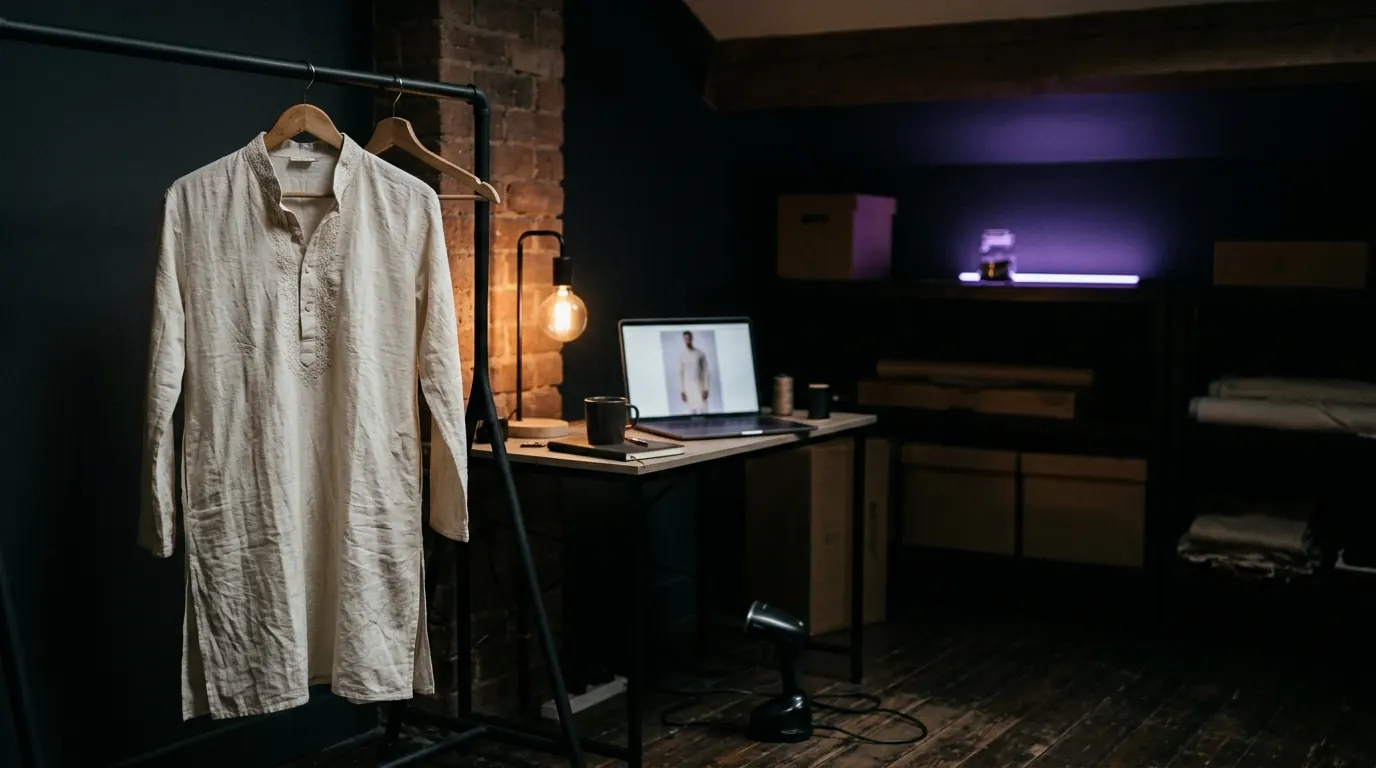
Where AI really earns its place is range. Once a garment is captured, you can show it on different body types, skin tones and ages, in a studio and on a street, without booking another model day. For brands selling across India that variety does real work, because a shopper in Surat and a shopper in Bengaluru respond to different faces and settings. It's the same logic as ad creative after Meta's Andromeda update: variety is what lets the platform find the right buyer.
The checklist we run on every image
Every AI product image is checked against the real product before it ships. For jewellery:
- Same metal tone (yellow, rose and white gold read very differently)
- Same stone count, cut and setting
- Same proportions: band width, pendant size against the chain
- Correct scale on the body (a 6mm stud shouldn't look like a 12mm one)
- Hands and fingers that are anatomically right
- No invented engraving, logo or extra detail
For clothing, add print alignment, true colour (check it against the real garment in daylight) and correct length.
If an image fails any line, we regenerate it rather than retouch it. A product photo that misrepresents the product costs you a return, a refund and a bad review.
Should you still book a photoshoot?
For a hero campaign with a known face, yes. For catalogue images, new arrivals and the volume of ad creative it takes to run Meta properly, an AI image pipeline is faster and cheaper, as long as the real product goes in as a reference and someone checks every output.
If you sell jewellery or clothing, send us one piece on WhatsApp and we'll make a free sample for your brand within 24 hours.