
What Andromeda actually is
In December 2024, Meta's engineering team published a post about Andromeda, the system that decides which ads are even considered for a person before the auction ranks them. Meta calls this stage retrieval. Your account might have 40 live ads. For one person scrolling Instagram at 10pm, Andromeda cuts a huge pool of ads from every advertiser down to a short list, and only that short list gets ranked.
Meta built it because the number of eligible ads exploded. Advantage+ campaigns, broad targeting and generative creative tools all mean more ads competing for every impression. The old retrieval stack couldn't keep up, so Meta replaced it with a far larger model that reads the ad itself (the visuals, the copy, the format) and matches it to people.
That last part is the one that matters if you make creative.
Why similar ads now cannibalise each other
When targeting was narrow, you told Meta who should see an ad. With broad targeting and Andromeda, the creative does that job. The model looks at what an ad is and works out who it's for.
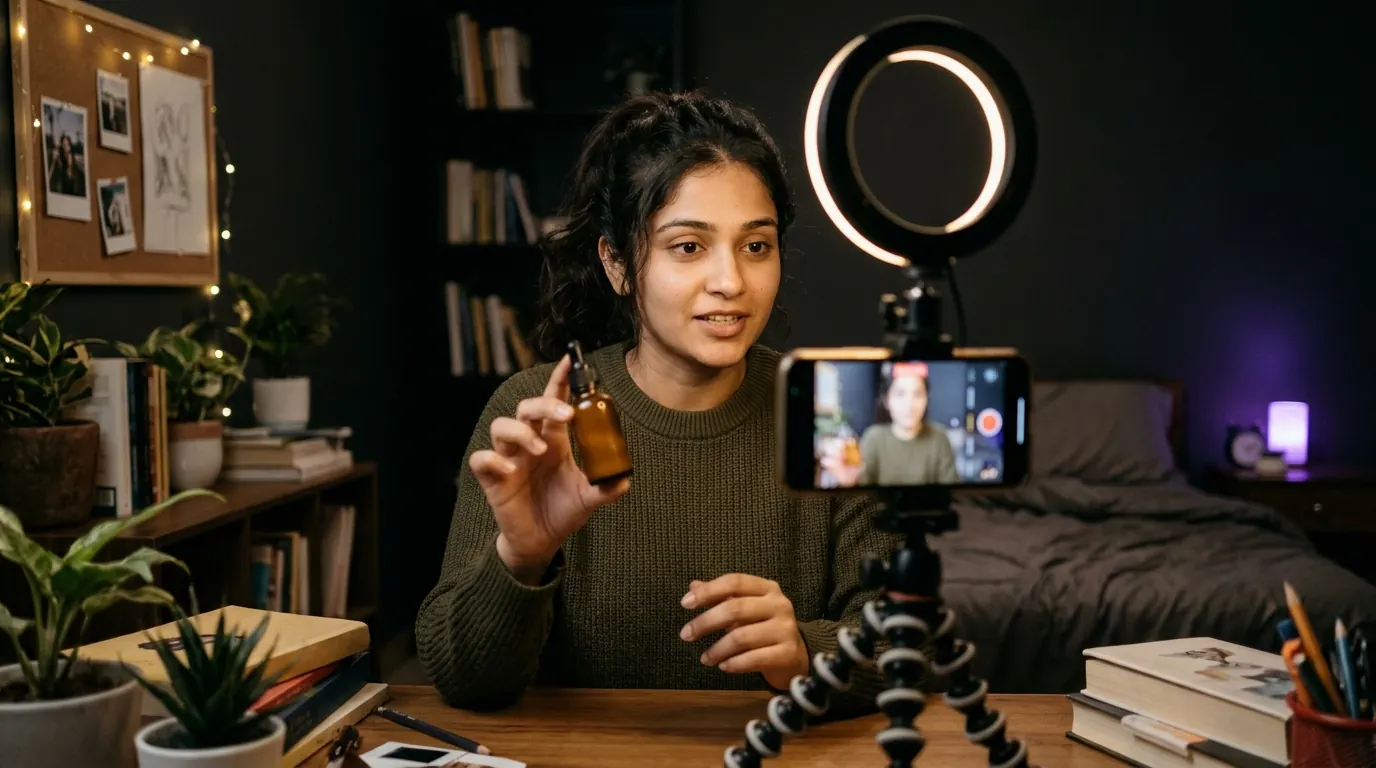
So think about uploading ten versions of the same video with ten different opening lines. To you, that's ten ads. To a system that reads visual content, it's mostly one ad: same face, same room, same product shot, same pacing. All ten get matched to the same pocket of people and fight over the same slots. You paid to produce ten ads and you get the reach of one or two.
Meta's own guidance since 2025 has leaned hard on this. It tells advertisers to diversify creative, and it has been specific that it means ads that differ in substance, not near-duplicates with small tweaks. Jon Loomer has a clear breakdown of what Meta has actually said, which is worth reading before you believe any "Andromeda hack" thread.
The four axes that make an ad actually different
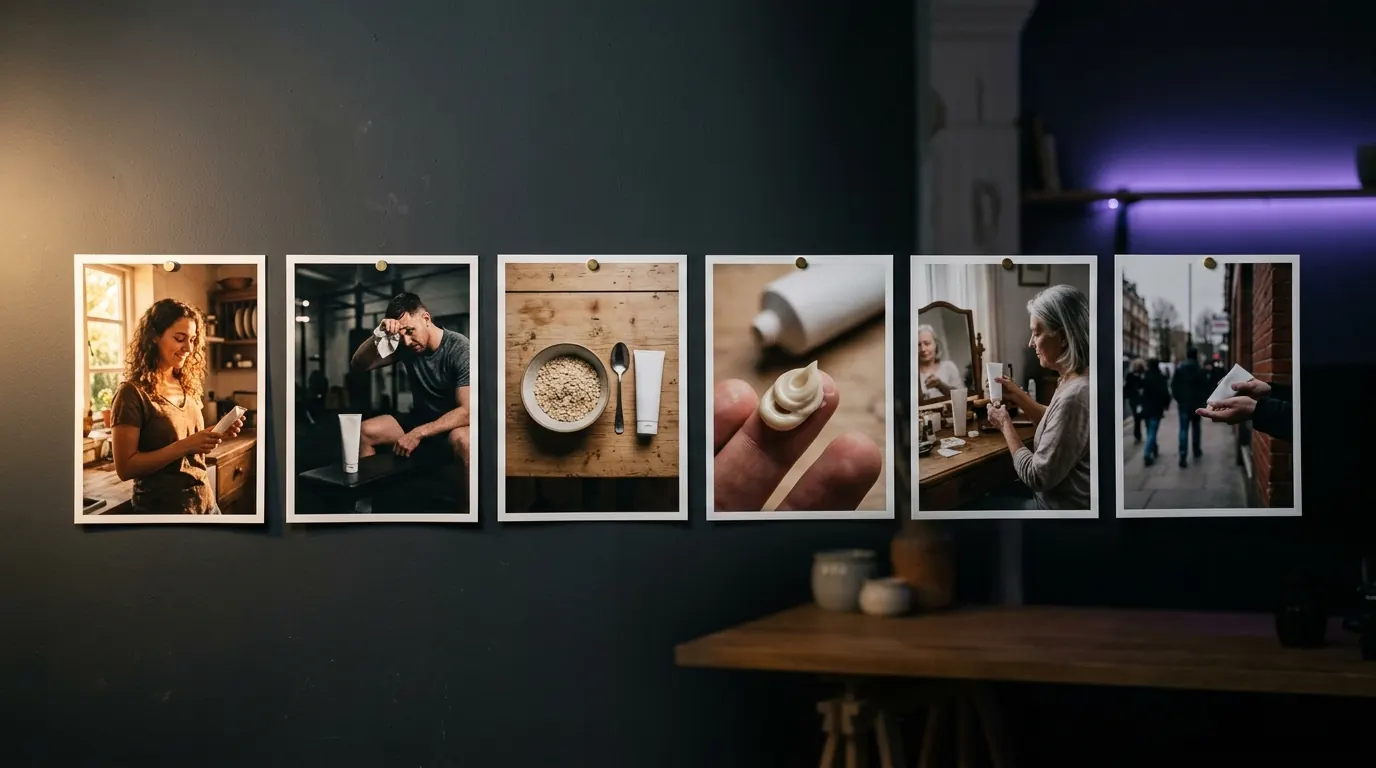
When we plan a month of creative for a D2C brand, every concept has to differ from the others on at least two of these four.
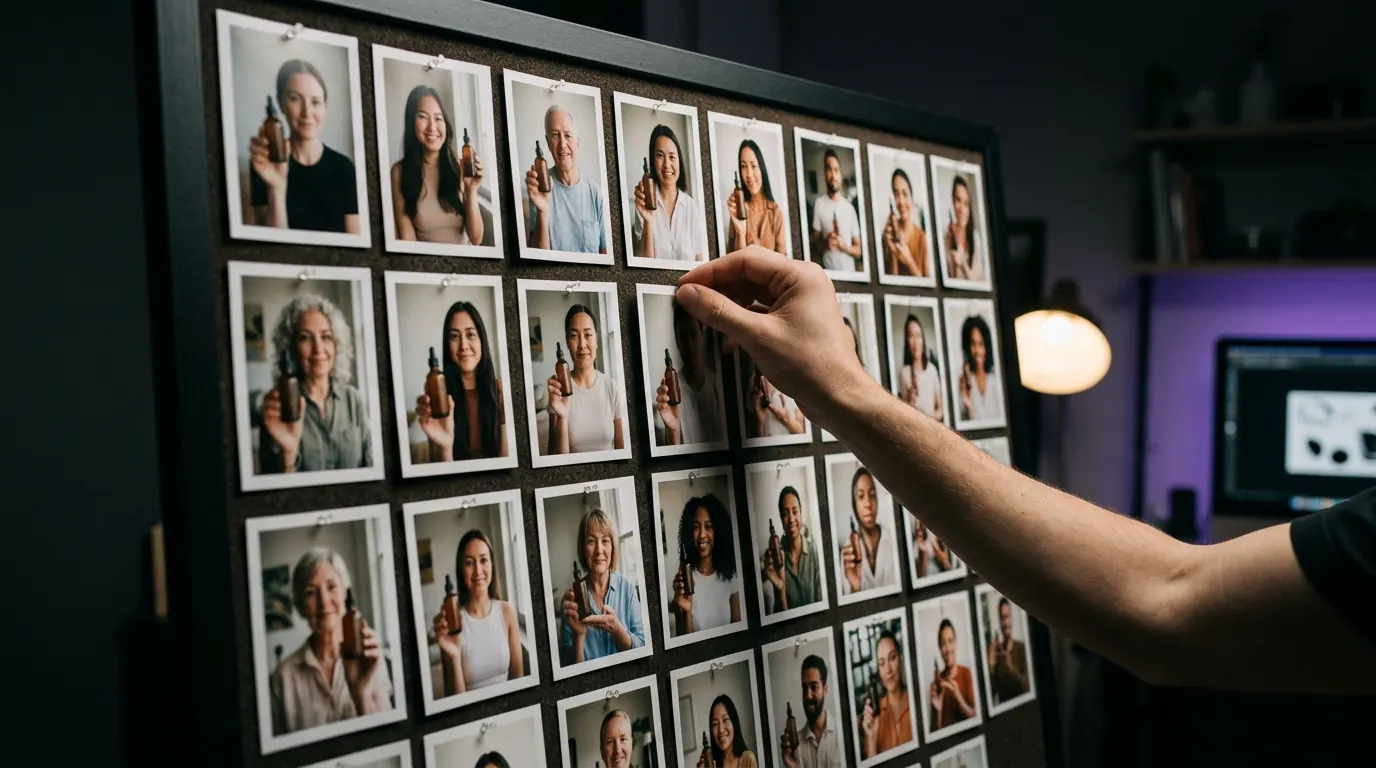
1. Who is speaking. A 24-year-old student and a 45-year-old working mother are different signals, even holding the same moisturiser. Age, gender, region, language and life stage all count. With creators this is the most expensive axis to vary, because every new person used to mean a new contract and a product shipment. With AI production it's the cheapest.
2. What they say. The angle. A problem ("my skin's oily by noon"), a result ("two weeks in"), a switch ("I moved from my old sunscreen because..."), an objection ("I thought this would break me out"), or a routine ("my three-step morning"). Different angles pull in different buyers.
3. The format. Talking-head UGC, a hands-only demo, a static carousel, a before and after, a stitched testimonial montage, a text-on-screen list. People respond to formats differently, so the model treats format as a real difference.
4. The setting. Bathroom mirror, office desk, gym bag, kitchen counter, a street in harsh afternoon light. Setting signals lifestyle, and lifestyle signals audience.
A new hook on the same footage changes none of the four. That's why "50 hook variations" so often performs like three ads.
A month of creative, planned for Andromeda
Here's how we'd structure 30 videos for a skincare brand in a month (which happens to be our Launch plan):
- 10 concepts, each built around a different person and angle
- 3 executions per concept, usually a 9:16 talking head, a hands-only demo and a short cut-down for Stories
- A different setting for each concept
- At least 3 of the 10 in a regional language, if you sell beyond the metros
That gives Meta ten genuinely different signals, with enough variants inside each to find the best edit. It's a far more useful 30 than 30 variations of one shoot.
Then give it two weeks and do two things. Retire the concepts that never got spend: Andromeda decided they weren't for anyone worth reaching. Then make more around the persona and angle that won, in a new setting and format, so you don't rebuild the duplicate problem you just escaped.
How to tell if your account has a similarity problem
You don't need a special tool. Open Ads Manager and check three things.
- Spend concentration. One or two ads in an ad set taking nearly all the budget while the rest sit near zero usually means Meta is treating the rest as weaker copies of the winner.
- Frequency on your winners. Rising frequency with flat reach on your best ad means the account has nothing fresh and different to rotate in.
- The thumbnail test. Put your live ads side by side as thumbnails. If you can't tell them apart at a glance, a model that reads visuals can't either.
Where AI production fits
Variety costs money when every new face is a new creator. Testing 10 personas used to mean briefing 10 creators, shipping product to 10 addresses and chasing 10 timelines. Most brands compromised: they tested two or three people, then filled the account with hook variations. That is exactly the pattern Andromeda punishes.
AI UGC turns a new person, setting or language into a production decision instead of a new contract. It's how we've delivered more than 1,500 ads for Adkrity and Xyxx, and more than 1,000 multilingual pieces for a group of beauty brands including Mamaearth and The Derma Co. The point was never volume for its own sake. It's that real variety becomes affordable. We compare the numbers in what a UGC video really costs in India.
If you want to see what a genuinely different concept looks like for your product, we'll make a free sample ad within 24 hours. Tell us the product and the customer you're not reaching yet.