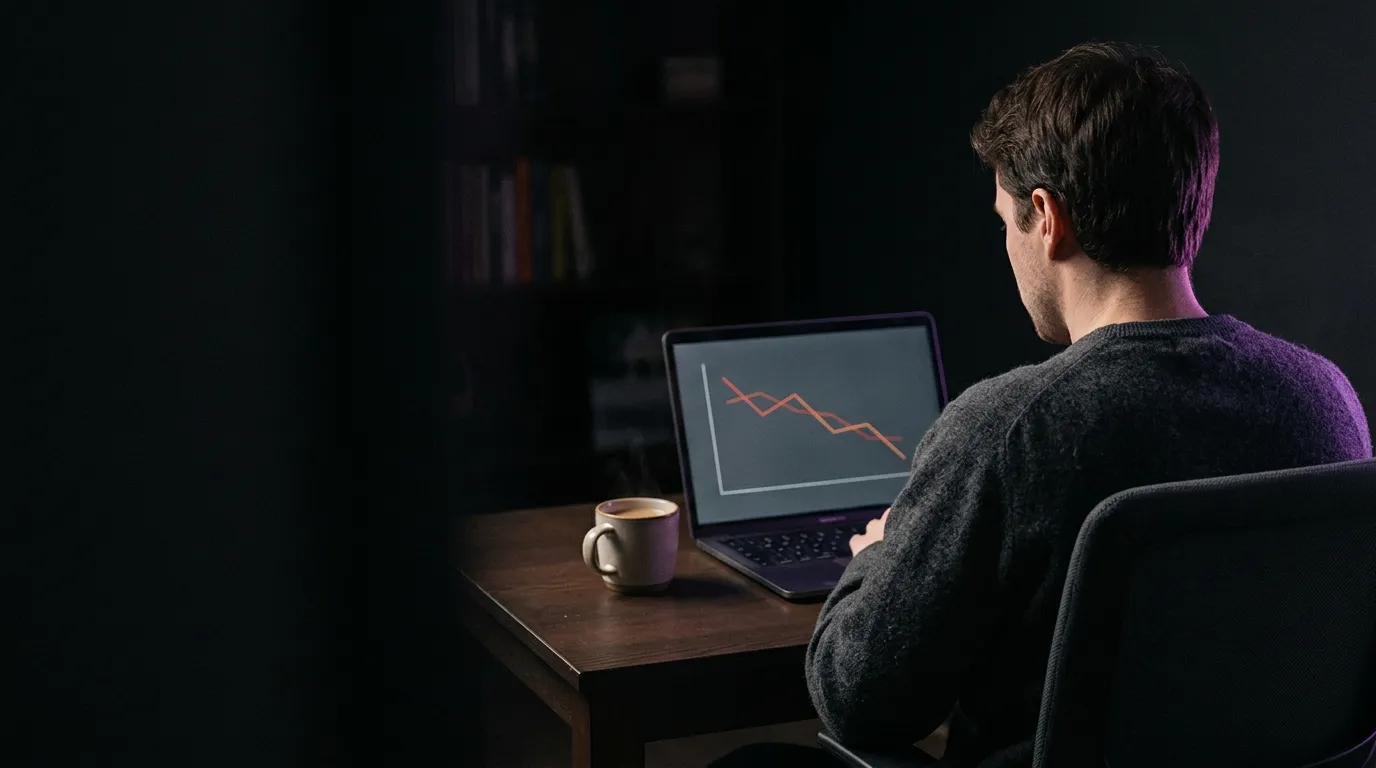
Few scenarios frustrate a performance marketer more than an ad set that delivers profitable conversions at ₹10,000 per day, gets scaled toward ₹1,00,000 per day, and suddenly stalls out with climbing cost per acquisition. When daily budgets scale tenfold, the Meta auction exposes every structural weakness in your creative pool much faster than it did at low spend.
A forensic breakdown of scaled ad decay almost always points to one of two bottlenecks. Either the opening three-second visual hook has exhausted its immediate pocket of high-intent buyers—causing thumbstop ratios to slide downward—or broad auction delivery brings in colder viewers who click out of curiosity but drop off mid-video because the middle demonstration fails to hold attention. Changing button colors, nudging contrast by five percent, or swapping background music rarely revives a fatigued winner because the underlying narrative entry point remains identical.
As detailed in Meta Engineering's breakdown of Meta Andromeda ad retrieval, modern personalized ad delivery relies on evaluating broad pools of genuinely diverse creatives to match distinct user signals at scale. Feeding a scaled budget a single tired concept starves the retrieval engine of fresh angles. Keeping profitable spend stable requires a modular pipeline of distinct opening hooks, proof demonstrations, and visual formats ready to rotate in before frequency spikes—see how we structure rapid variant pipelines in our XYXX Generative Video Ads case study.